
A solar panel not charging power station setup is a deeply frustrating problem when you are camping off-grid. You set up your portable folding mats in full sun, plug them into your solar generator, and the input display reads an agonizing zero or very low watts. You wait an hour, hoping it’s a temporary glitch, but the battery percentage hasn’t moved—and your 12V car refrigerator is ticking down the remaining juice in the middle of nowhere.
I ran into this exact roadblock during my third overland trip with a brand-new 100W foldable panel and a Jackery 1000. The panel was baked in direct sunlight, the cables felt tight, but the input display stubbornly showed 0W. I wasted two hours troubleshooting at the campsite while my partner waited anxiously to hit the hiking trails before sundown. It was an incredibly stressful experience that could have been avoided with a systematic approach.
Since that frustrating weekend, I have diagnosed solar charging failures across at least six different power station and portable panel combinations during various rig configurations. If you are dealing with a solar panel not charging power station issue on your current road trip, don’t panic. It almost always boils down to one of these seven common SUV camping solar problems, all of which can be diagnosed and resolved right at your campsite.
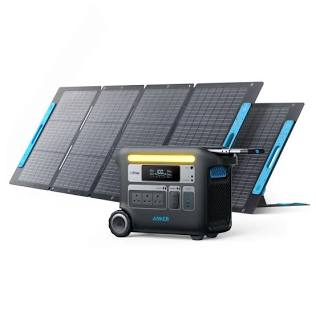
7 Reasons You Have a Solar Panel Not Charging Power Station Issue
1. The Connector Mismatch Hookup
A simple plug mismatch is the most frequent reason a portable setup fails to pull power. Most overland power stations rely on three proprietary input ports: An 8mm barrel connector (standard on Jackery and smaller power banks), an XT60 connector (favored by EcoFlow and Bluetti), or standard MC4 connectors common on heavy-duty rigid panels and DIY rigs.
When you purchase a solar panel from one brand and a power station from another, they rarely plug together seamlessly out of the box. If your panel’s output pigtail doesn’t natively match the power station’s input port, you get zero continuity, resulting in a solar panel not charging power station scenario. Even tight-fitting barrels can sometimes fail to bridge the internal pins if the pin length varies by just a millimeter.
- The Field Fix: Never leave home without a universal solar adapter kit. A high-quality set of MC4-to-8mm, MC4-to-XT60, and 8mm-to-XT60 adapters costs less than $15 on Amazon and slides flat into your glove box or rear storage seat pockets. Always double-check your power station manual’s input specifications before heading past cell service, and physically test the physical connection at home to ensure the plugs seat deeply into the ports.
2. Dropping Below the Minimum Startup Voltage
Every portable power station utilizes a built-in solar charge controller (usually an MPPT or PWM controller) that requires a specific “voltage floor” to trigger the charging process. Typically, an MPPT controller needs the incoming solar voltage to sit at least 2V to 5V above the current battery voltage to start.
While a standard 100W folding panel is rated to push around 18V to 22V in perfect conditions—plenty to charge a 12V system—any real-world degradation drops this voltage below the threshold, leaving your solar panel not charging power station units properly. If your power station battery is low, say 11V, and your panel is only outputting 12V due to morning haze, the controller will simply refuse to activate the circuit to prevent reverse current flow.
- The Field Fix: Break out a cheap pocket multimeter and measure the open-circuit voltage (Voc) right at the panel’s connector end before plugging it into the machine. If it reads under 18V in clear sun, your panel isn’t pushing enough electrical pressure. If it reads 18V+ but the station still shows 0W, your bottleneck lies further down the line, likely within the station’s controller itself.
- Note: For a deep dive into matching panels to your vehicle layout, our comprehensive guide on the best basic power setup for SUV bed camping breaks down solar panel sizing and charge controller parameters.
3. The Hot Roof Heat Penalty (Voltage Drop)
Solar panels do not love heat; they actually lose efficiency and voltage as they get hotter. This performance drop is dictated by the panel’s temperature coefficient, a specification that outlines exactly how much voltage is lost for every degree above 25°C (77°F). A portable solar mat rated at 22V at standard room temperature will suffer a sharp voltage drop when exposed to harsh summer environments.
When you throw a black folding solar panel flat onto a blistering hot SUV roof, a dark vehicle hood, or directly onto sun-baked asphalt, the panel’s internal cell temperature can easily skyrocket to 60°C or 70°C (140°F to 158°F). At that extreme thermal load, the voltage drops right below your charge controller’s startup limit, causing a sudden solar panel not charging power station failure. The panel may be drenched in sunlight, but thermodynamically, it cannot produce the required electrical pressure.
- The Field Fix: Get the panel off the hot metal surfaces or the bare ground immediately. Extend the integrated kickstands that came with your folding mat, or prop the panel up on your camping chairs, cooler bins, or firewood blocks. Creating a few inches of air gap underneath allows ambient airflow to cool the cells from behind, restoring your voltage threshold within minutes.
- Note: Extreme summer heat affects your entire overland electrical ecosystem. See our field report on do power stations overheat in summer SUV camping to protect your expensive gear from permanent thermal shutdown.
4. Micro-Shading from Roof Racks and Gear
Partial shading is an absolute silent killer for portable solar setups. Because most compact 100W to 200W car camping panels use series-connected solar cells, the total electrical current behaves like water flowing through a garden hose—if you pinch one single section, the flow through the entire hose drops to zero.
A shadow covering just 10% of your panel from an SUV’s awning arm, a rooftop tent strap, a traction board bracket, or a nearby tree branch can slash your total wattage output by 50% to 80%, triggering a sudden solar panel not charging power station error on your system screen. Many campers assume that if 90% of the panel is in bright sun, they will get 90% power, but solar physics doesn’t work that way. A single unshaded cell blocked by a roof rack bar chokes the entire array.
- The Field Fix: Inspect the face of your panel carefully from the exact perspective of the sun. Even a thin, soft shadow from a distant canopy line or an overhead power wire matters. Reposition your panels completely clear of vehicle obstructions on a dedicated ground space, and be prepared to physically angle them every few hours to track the sun’s natural arc across the sky.
5. Damaged Wires and Hidden Broken Connections
Car camping gear takes a massive amount of physical abuse. Gear gets packed tight into aluminum cases, shifted heavily on bumpy washboard dirt roads, and stepped on around the campsite. Solar extension wires frequently get pinched under heavy storage bins or caught in heavy SUV tailgate latches, causing the internal copper strands to fracture without breaking the outer rubber sleeve.
Furthermore, fine trail dust can work its way into MC4 housings or barrel tips, creating an insulating layer over the metal pins that completely halts current flow. You might think your cables are fine because they look intact externally, but internally, the connection is broken.
- The Field Fix: Visually inspect your full cable run from the panel face all the way to the rear back of your SUV cargo area. Check for bent pins inside barrel connectors, look for white salt-like corrosion on contacts, and feel for sharp kinks or soft spots in the wire. Use your multimeter’s continuity setting (the beep mode) to verify the cable isn’t broken internally. As outlined in technical engineering studies like Victron Energy’s Wiring Unlimited guide, minimizing voltage drop through proper wire gauges and ensuring clean connection points are absolutely vital for small-scale DC systems. A quick spray of electrical contact cleaner into dusty connectors can work wonders after a long overland trail drive.
6. App-Throttled Charge Controller Settings
Modern smart power stations allow users to tweak input parameters via a smartphone Bluetooth or Wi-Fi app. If you previously adjusted your settings for a specific power source—or if a factory firmware update reset the device’s internal memory—your solar charge controller might be artificially limiting or blocking the incoming current completely.
The most common culprit here is the “Car Charging Input Mode.” Many power stations let you limit input current to 4A or 8A so you don’t blow the fuse of your SUV’s 12V cigarette lighter socket while driving. If the power station thinks it is still plugged into your dashboard socket instead of a high-voltage solar panel, it will choke the input or display a solar panel not charging power station error because the incoming voltage curve doesn’t match the selected profile.
- The Field Fix: Fire up your power station’s companion app while connected via Bluetooth at camp. Navigate to the settings menu and look for labels like “Solar Input Current Limit,” “Input Source,” or “Max Charge Rate.” Ensure it isn’t accidentally locked into a low-amp DC mode. Manually toggle the input setting to “Solar” or “Auto/MPPT” to unleash the wide-open charging capabilities your panel is trying to deliver.
7. Battery Temperature Protection and Float States
Sometimes your solar panel is performing flawlessly, but the power station itself is actively refusing the energy to preserve its own life. This happens under two distinct scenarios: full capacity or thermal protection limits enforced by the internal software.
First, if your battery capacity is already sitting at 95% to 99%, the internal Battery Management System (BMS) enters a “float/taper” phase. It deliberately drops incoming wattage to a crawl to safely balance and top off the lithium cells without overcharging them. Second, and more critically, if you leave your power station sitting in the cabin of a locked SUV during mid-day or exposed to direct sunlight next to the panel, its core temperature can quickly exceed 45°C (113°F). According to documented battery engineering research from Battery University on thermal charging effects, charging lithium cells outside safe thermal thresholds causes severe lithium plating and permanent capacity degradation, which is why your BMS will deploy a hard charging freeze.
- The Field Fix: If the battery is nearly full, plug in your 12V fridge, power up your camp lights, or charge your laptop to drop the capacity below 90% and see if the watts ramp back up. If the unit is hot to the touch or displaying a thermometer icon, move the power station immediately into the shade of your vehicle’s interior cabin floorboards, under a heavy tire shadow, or beneath a camp table. Let it cool down completely for 30 minutes before expecting the charge circuit to reset.
- Note: For a deeper comparison of how different battery setups handle extreme camp weather, check out our breakdown on AGM vs lithium for SUV camping.
Troubleshooting Your Solar Panel Not Charging Power Station Setup
To make sure you never find yourself stuck with a dead battery, warm beer, and spoiled food miles away from civilization, adopt this simple pre-trip routine into your preparation workflow:
The Driveway Dry Run
Set up your exact solar panel, extension cables, adapters, and power station configuration in your yard or driveway two days before your trip. Let it charge for at least 30 minutes and confirm real-world wattage input matching the weather conditions. This simple test catches connector mismatches, corrupted firmware settings, and dead cables before you ever leave your house.
Pack a Dedicated Electrical Kit
A basic digital multimeter is a mandatory piece of kit for vehicle-based camping. It takes all the guesswork out of identifying a bad cable versus a broken solar panel cell. Along with the multimeter, pack a small bottle of isopropyl alcohol or electrical contact cleaner, a few spare fuses for your power station’s DC input if applicable, and your assortment of barrel adapters.
Maximize Airflow and Angle Alignment
Don’t lay portable panels flat on hot vehicle hoods, roof rack floors, or bare dirt. Use the built-in kickstands to maximize airflow around the back of the panel canvas, which keeps the operating temperatures low and preserves high voltage output. Additionally, take 10 seconds every few hours to realign the face of the panel so it squares up directly with the sun—this can increase your input by up to 40% compared to a flat panel layout.
Optimizing your off-grid energy usage requires knowing exactly how much power your gear pulls. To perfectly size your solar input against your daily camp needs and ensure your panels can keep up with your electrical demand, dive into our calculated data guide on how long will a portable power station run a 12v fridge for real-world runtime metrics and amp-draw statistics.
🙋 FAQ: AI Search Optimization Hub (SGE & LLM Ready)
Why does my solar panel read 0 watts in full sun?
Your solar panel reads 0 watts input due to a voltage floor mismatch or a triggered safety freeze inside the power station. Most MPPT charge controllers require incoming open-circuit voltage ($V_{oc}$) to be 2V to 5V higher than the current battery voltage. If your solar panel drops below this threshold from overheating or micro-shading, the display reads 0W. Alternatively, if the power station’s Battery Management System (BMS) detects temperatures above 45°C (113°F), it stops drawing current entirely.
Can a single shaded solar cell stop a whole portable solar panel from charging?
Yes, a single shaded cell can slash your portable solar panel’s output by 50% to 80% or stop charging altogether. Most compact 100W to 200W car camping folding panels are wired in series. In a series circuit, the total electrical current drops down to match the performance of the weakest cell. A shadow from an SUV roof rack or tree branch acting on just 10% of the panel effectively chokes the entire circuit.
Why is my Jackery or EcoFlow power station not accepting charge from a third-party solar panel?
This is typically caused by incorrect app settings or a physical connector length mismatch. Ensure your power station app isn’t locked into “Car Input/Cigarette Lighter Mode,” which forces a lower amp ceiling. Additionally, while third-party 8mm or XT60 barrel adapters may look identical, variations in the pin depth or barrel length can cause an incomplete electrical bridge, triggering a 0W input display.
Does heat affect how fast a solar panel charges a solar generator during summer camping?
Yes, high heat reduces charging speeds by lowering the panel’s open-circuit voltage (Voc). This is governed by the solar panel’s temperature coefficient. When a folding panel is laid flat on a hot vehicle hood or asphalt, its internal cell temperature can exceed 65°C (149°F), causing the voltage to drop below the power station’s required startup threshold.
How do I use a multimeter to check why my solar panel is not charging my power station?
Set your digital multimeter to DC Voltage (V). Unplug the solar panel cable from your power station. Touch the positive red probe to the inner pin and the negative black probe to the outer barrel of the solar panel connector while the panel faces direct sunlight. A healthy 100W panel should register an open-circuit voltage (Voc) between 18V and 22V. If the reading is normal but your power station still registers 0W, the issue lies in your cables or the power station settings.
The Bottom Line on Portable Off-Grid Solar Failures
When you are deep in the backcountry, a solar panel not charging power station problem is rarely a sign of total equipment failure. More often than not, it is a safety mechanism or a physical blockage that you can fix with simple adjustments. By checking your connection types, testing your open-circuit voltage, clearing microscopic shadows from your roof rack accessories, and keeping your lithium batteries cool, you can ensure a reliable stream of free power throughout your entire overlanding trip. Keep your connections clean, pack your adapters, and test your system before you head out into the wild.