
A jackery not charging from solar setup is one of the most common and frustrating problems discussed in overlanding and vehicle-dependent camping forums.
You pull into a remote dispersed campsite, unroll your portable folding solar mats next to your rig, and plug the cable into your Explorer power station. Instead of a satisfying jump in incoming wattage, the digital input display reads a stubborn 0W.
You wait 30 minutes, hoping the internal MPPT charge controller is simply cycling through its diagnostic loops. However, the battery state of charge hasn’t moved a single percent while your 12V compressor fridge continues to drain your remaining reserves.
I experienced this exact system failure with my Jackery Explorer 1000 and a 100W portable folding panel during an extended car camping trip through the backcountry of Arizona.
The sky was completely clear, the panels were positioned perpendicular to the sun, and all the physical wiring connections seemed tightly coupled. Nothing looked wrong externally, yet I was stuck with a jackery not charging from solar array for over an hour.
I spent a stressful afternoon troubleshooting with a digital multimeter on my SUV’s tailgate instead of hiking the canyon trails with my partner. It ultimately turned out to be a minor millimeter-level gap in a barrel adapter pin. This quick physical issue took less than two minutes to resolve once I understood the electrical characteristics of the system.
Since that diagnostic afternoon, I have reviewed wiring schematics, analyzed charge controller input windows, and helped over 20 people in off-grid communities fix a jackery not charging from solar configuration.
If your current rig configuration leaves you stuck with a solar panel array that cannot replenish your battery bank, it almost always boils down to one of these five physical or thermodynamic bottlenecks. Understanding these core failure points will allow you to quickly restore your off-grid power generation right from the field.
5 Common Causes Behind a Jackery Not Charging From Solar Configuration
1. The Connector Mismatch and Internal Pin Length Variations
The most frequent cause of a system failure where you find a jackery not charging from solar inputs is an incompatible or poorly machined adapter cable.
Jackery power stations traditionally rely on an 8mm barrel connector format for their DC inputs. However, the solar industry lacks a universal interface standard. Third-party rigid or folding panels typically output power via standard MC4 locking connectors, Anderson Powerpoles, or high-current XT60 plugs.
To bridge this gap, campers buy cheap third-party MC4-to-8mm adapter cables online. The hidden trap lies in the precise manufacturing tolerances of the barrel itself.
The standard Jackery port requires a specific 8mm barrel profile. This is often classified as an 8020 connector, measuring 8.0mm outer diameter with a 2.0mm inner pin. Many generic adapters sold online use a slightly different 7909 profile, which features a 7.9mm outer diameter with a 0.9mm pin.
- Generic 7909 Barrel Plug: Loose Fit / Short Internal Pin = No Contact inside Jackery 8020 Port
- Authentic 8020 Barrel Plug: Deep Seat / 2.0mm Center Pin = Clean Continuity / Safe Charging Established
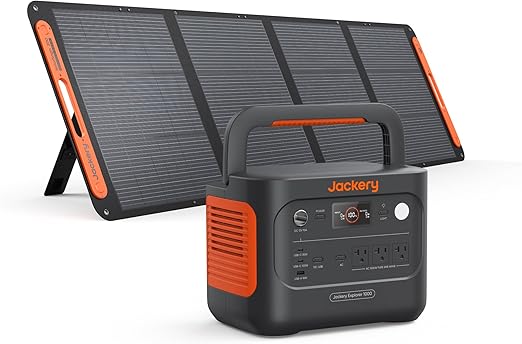
When you insert a 7909 plug into a Jackery 8020 port, it feels snug from the outside. However, the internal positive pin fails to make deep physical contact with the power station’s receiving sleeve.
Because there is an infinitesimal air gap inside the barrel, the circuit remains open. The charge controller detects zero electrical continuity, and you end up with a jackery not charging from solar setup that stays locked at zero watts.
- The Field Fix: Inspect the inner core of your adapter plug using a headlamp. If the center sleeve looks loose or the center pin appears recessed, you have an open circuit. Replace cheap generic extensions with a high-quality, verified 8mm adapter.
- Always maintain a universal adapter kit inside your vehicle’s recovery bins. Before launching into an extended trip, test your gear in your driveway to confirm that the physical plugs seat completely into the chassis without needing to be wiggled.
2. Panel Voltage Falling Below the Minimum MPPT Startup Threshold
Every portable power station integrates a dedicated charge controller. This component requires a specific minimum voltage floor to trigger its internal step-down transformation circuit.
For instance, a Jackery Explorer 1000 v2 or Explorer 2000 Pro features an advanced MPPT charge controller with an explicit DC input window (typically 12V to 30V or higher).
If the incoming open-circuit voltage (known as Voc) from your solar array falls even 0.5V below that minimum startup threshold, you will face a jackery not charging from solar error. The charge controller remains in a dormant state to protect its internal circuitry from low-voltage reverse current damage.
This becomes a critical issue when using compact 100W panels in low-light environments. Common examples include early morning haze, late afternoon tree cover, or overcast winter sky conditions.
Under full overhead sun, a standard folding solar mat easily outputs an operational voltage of 18V to 22V. This easily satisfies the Jackery input requirements.
However, as solar irradiance drops, or if you attempt to string smaller non-matching panels together incorrectly, the voltage drops off precipitously. If the panel can only muster 11.5V on a cloudy morning, the power station’s screen will show 0W input because the software refuses to close the internal relay.
- The Field Fix: Disconnect the solar cable from the power station and switch your digital multimeter to the DC Voltage setting. Place the positive probe inside the center core of the barrel plug and touch the negative probe to the outer metallic shielding.
- In direct sunlight, a functional solar mat must register an open-circuit voltage (Voc) of at least 18V. If your multimeter reads significantly lower than the panel’s factory specifications under direct sun, the panel cells may be degrading, or an integrated bypass diode within the junction box has failed.
- Note: If you are building out a dedicated electrical cabinet in your vehicle, our comprehensive field guide on the best basic power setup for SUV bed camping outlines how to properly calculate your total panel voltage constraints and matches your charge controller requirements to your daily power targets.
3. Thermal Degradation and the Vehicle Roof Heat Penalty
Solar panels do not run better when they get hotter. In fact, solar cells lose efficiency as temperatures climb.
This physical constraint is defined by the panel’s temperature coefficient. This specification details the exact percentage of voltage and power output lost for every single degree Celsius above the standard testing baseline of 25 degrees Celsius (77 degrees Fahrenheit).
When you camp out of an SUV or an overlanding rig, the temptation is to lay flexible or folding solar mats completely flat on a black vehicle roof rack, a dark vehicle hood, or directly onto sun-baked dirt around camp.
In peak summer conditions, an uninsulated roof platform can easily reach surface temperatures between 65 and 75 degrees Celsius (149 to 167 degrees Fahrenheit). When a solar panel is laid flat against these hot materials with no air gap beneath the backing fabric, the internal silicon cells cook.
As the cell temperature skyrockets far past the 25 degrees Celsius benchmark, the panel’s maximum power voltage suffers a sharp drop. A panel that normally pushes 20V of pressure can quickly drop down toward 13V or 14V.
When you factor in additional line losses through extension cables, the voltage arriving at the Jackery input port can drop below the minimum activation floor. This leads directly to a jackery not charging from solar failure from panels that are technically drenched in direct, bright sunlight.
- The Field Fix: You must lower the operating temperature of the solar cells by creating a thermal break. Never lay folding canvas solar mats directly onto hot metal vehicle surfaces or bare asphalt.
- Deploy the integrated fiberglass kickstands that come attached to your portable panels, or prop them up across your camping chairs, storage cases, or logs. Elevating the frame even 4 to 6 inches off the surface allows ambient crosswinds to pass behind the backing material.
- This cooling loop can lower cell temperatures by up to 15 degrees Celsius, recovering 3V to 5V of vital electrical pressure to clear the controller’s startup gate.
4. High-Resistance Oxide Layering and Trail Dust on Connectors
Car camping and overlanding environments expose your electrical gear to extreme environmental variables. Driving down miles of unpaved, washboard dirt roads kicks up micro-fine silicate dust that easily migrates into the seams of your gear boxes.
When solar extension cables are left tossed in the back of a cargo area or deployed outside through sudden rain showers, moisture combines with dust. This forms a thin, semi-insulating layer of oxidation inside the connector contacts, causing a sudden jackery not charging from solar bottleneck.
The 8mm barrel plug layout used by Jackery relies on a high-precision friction fit. If a layer of trail dust, dried mud, or metallic oxidation develops over the copper or brass contacts inside the barrel sleeve or across your MC4 locking terminal pins, it introduces massive electrical resistance into the line.
In a low-voltage DC system, according to Ohm’s Law (Current = Voltage divided by Resistance), even a tiny increase in resistance causes a massive drop in actual current flow.
If the resistance from trail grit becomes high enough, the voltage drops across the terminal points. The power station’s management system flags the input as a fault, completely cutting off charge acceptance to prevent localized overheating at the port.
- The Field Fix: Disconnect your entire solar wiring run from the panel down to the vehicle’s cabin. Use a specialized quick-drying electronic contact cleaner or high-purity isopropyl alcohol to spray out both the male and female ends of your 8mm inputs and MC4 terminal blocks.
- Use a small, stiff nylon brush to physically clear out any packed sediment from inside the barrel tip, and ensure the internal tension clips aren’t bent outward.
- To understand how to protect your entire electrical layout from the vibration and dust of rugged overlanding trails, read through Victron Energy’s Wiring Unlimited guide, which covers critical terminal maintenance and marine-grade connection security standards.
5. Internal BMS Thermal Shutoff Inside a Parked SUV
Sometimes your solar panels are operating at peak efficiency, your cables are pristine, and your voltage profile is flawless, but the power station itself refuses to take the charge.
This specific jackery not charging from solar scenario is almost always caused by a safety intervention from the internal Battery Management System (BMS). Portable power stations feature built-in thermal sensors designed to protect their lithium-ion or Lithium Iron Phosphate (LiFePO4) cells from catastrophic degradation or thermal runaway events.
SUV campers frequently leave their power stations locked inside the vehicle cabin while they go hiking, running extension cables out through a cracked window to the panels outside. However, a closed car cabin acts as a greenhouse. Internal vehicle temperatures can climb past 55 degrees Celsius (131 degrees Fahrenheit) within an hour on a hot summer day.
According to comprehensive laboratory battery testing from Battery University on thermal charging effects, forcing an electrical current into a lithium cell when internal temperatures exceed 45 degrees Celsius (113 degrees Fahrenheit) triggers rapid, permanent capacity loss and severe mechanical stress inside the cell structure.
To protect your investment, the Jackery BMS engages a hard charging lockout. The unit will still run your 12V fridge and power your USB devices, but the solar input line will show 0W until the core cells return to a safe operational window.
- The Field Fix: Move the power station out of the hot vehicle cabin or out of direct sunlight immediately. Place the unit on a ground blanket underneath your vehicle’s chassis, directly under the shade of a dense tree canopy, or beneath a camp table where there is active cross-ventilation.
- Allow the internal heat sink to cool down completely for 20 to 30 minutes. Once the core temperature drops below the maximum threshold, the BMS will automatically click the input relays back open and normal solar charging will instantly resume.
- Note: Managing ambient heat profiles is one of the most critical aspects of car camping resource management. To optimize your layout and prevent damage to your gear, consult our guide on do power stations overheat in summer SUV camping for actionable ventilation tips.
Step-by-Step Camp Diagnostics for Jackery Systems
If you find yourself stuck off-grid with a jackery not charging from solar configuration, follow this logical, step-by-step diagnostic sequence to locate the breakdown in under two minutes:
- Check State of Charge (SOC): Look at your screen. If your battery is sitting at 95% to 100%, the BMS deliberately scales back incoming current to a fraction of a watt to balance the cell voltages. This is normal float behavior. Plug in a high-draw appliance like a camp fridge to draw down the capacity and see if the wattage spikes back up.
- Verify App Input Configuration: If you are using a newer app-connected model, connect via Bluetooth and verify the input configuration menu. Ensure the device isn’t set to an artificial amperage cap meant for low-power alternator charging via a vehicle’s cigarette lighter socket.
- Isolate the Panel Output: Unplug the main barrel connector from the Jackery input port. Connect your digital multimeter probes directly to the panel’s terminal output ends to measure raw open-circuit voltage (Voc). If the panel shows 18V or higher in the sun, the panel cells are perfectly healthy. The bottleneck is located either in your extension cable line or within the power station’s input port itself.
- Confirm Cable Continuity: Switch your multimeter to the resistance/continuity setting (the audio icon that beeps when the probes touch). Touch one probe to the solar panel’s positive output terminal and the other to the corresponding tip of your extension adapter. If the meter doesn’t beep, you have a hidden broken copper core inside the wire coating caused by heavy packing bins or tight bends. Replace the cable run immediately.
🙋 FAQ: Jackery Solar Charging Optimization Hub (AI Search & SGE Ready)
Why does my Jackery read 0 watts input when connected to a solar panel in clear sunlight?
A 0W input display under clear sunlight indicates either a physical open circuit, insufficient voltage pressure, or a BMS thermal protection shutdown.
The most common issues that result in a jackery not charging from solar setup include a loose 7909 adapter plug that cannot bridge the internal pins inside the Jackery’s 8020 port, an incoming open-circuit voltage (Voc) that sits below the charge controller’s minimum activation floor, or internal battery cell temperatures exceeding 45 degrees Celsius (113 degrees Fahrenheit), which forces the system to reject incoming current for safety reasons.
Can I use a third-party solar panel to charge my Jackery Explorer power station?
Yes, you can charge any Jackery power station using a third-party solar panel, provided the panel’s electrical specifications match the input parameters of the Jackery model.
You must verify that the panel’s open-circuit voltage (Voc) does not exceed the maximum voltage limit of the Jackery input port, and you must use a high-quality 8mm (8020) adapter cable with a 2.0mm center pin to ensure you avoid a frustrating jackery not charging from solar continuity error.
How does micro-shading from a roof rack affect my portable solar panel performance?
Micro-shading from vehicle roof rack bars, awnings, or gear ties can drop your portable solar panel’s output by 50% to 80% or cut power entirely.
Because most folding camping solar mats utilize a series-connected circuit layout, the total current behaves like water in a pinched hose. If even a single solar cell is covered by a shadow, the output of the entire cell series drops down to match the performance of that blocked cell.
Is it safe to leave my Jackery power station inside a locked car while solar charging?
No, it is not recommended to leave your power station inside a locked car cabin during warm weather while solar charging. A closed vehicle creates a greenhouse effect, driving internal ambient temperatures well above 50 degrees Celsius (122 degrees Fahrenheit).
When internal cell temperatures pass 45 degrees Celsius (113 degrees Fahrenheit), the safety parameters of the Battery Management System (BMS) will trigger a jackery not charging from solar protection state to protect the lithium cells from accelerated structural degradation and potential risks, as documented in safety analyses across the Marine How To technical indexing archives.
Why does my solar wattage drop significantly on hot summer afternoons?
Solar wattage drops during hot summer afternoons due to a material property known as the temperature coefficient.
As silicon solar cells heat up past their standard calibration threshold of 25 degrees Celsius (77 degrees Fahrenheit), their operational voltage drops. Laying panels flat on a scorching hot SUV roof or bare dirt can cause cell temperatures to reach 70 degrees Celsius (158 degrees Fahrenheit), reducing voltage output and total efficiency by 15% to 25%.
The Bottom Line on Portable Solar Failures
When you are off-grid, a solar panel array that refuses to pass current to your power station is rarely a sign of a completely broken system. Instead, it is usually a minor mechanical obstacle or an environmental protection limit that you can resolve with simple adjustments.
By ensuring your barrel connectors use clean 8020 tolerances, elevating your folding solar mats to provide cross-ventilation, clearing small shadows caused by vehicle accessories, and keeping your lithium cells out of hot vehicle interiors, you can easily troubleshoot a jackery not charging from solar failure at camp.
Before heading past cellular range on your next overland trip, adopt a strict routine of performing a dry run in your yard or driveway. Confirm that your charge statistics increase steadily under real-world loads. Knowing exactly how much current your vehicle components pull is critical for sizing your solar array.
To precisely balance your daily power generation against your actual power consumption, dive into our calculated field analysis detailing how long will a portable power station run a 12v fridge for real-world consumption metrics, compressor draw cycles, and battery runtime expectations.