
When shopping for a portable power station, you’re really shopping for a battery. And not all batteries are created equal.
The two dominant chemistries in today’s market are LiFePO4 (Lithium Iron Phosphate) and NCM (Nickel Cobalt Manganese). Understanding lifepo4 vs ncm battery power station differences isn’t just technical trivia—it directly impacts how long your power station lasts, how safe it is in your home or vehicle, and whether it’s the right fit for your actual usage.
This guide cuts through the marketing noise and explains what actually matters when choosing between these battery types.
If you want runtime estimates for specific loads, use the tool here: power station runtime calculator
What is LiFePO4 (Lithium Iron Phosphate)?
LiFePO4 batteries use lithium iron phosphate as the cathode material. This chemistry has gained massive popularity in portable power stations over the past few years, and for good reason.
Key characteristics of LiFePO4
Lifespan champion:
LiFePO4 batteries typically last 3,000 to 6,000+ charge cycles before reaching 80% capacity. For context, if you fully discharge and recharge your power station daily, that’s 8–16 years of use. Even heavy users will see a decade of service.
Thermal stability:
These batteries are inherently safer. The phosphate-based cathode is structurally stable and doesn’t release oxygen when heated, dramatically reducing fire risk. That’s why LiFePO4 is the chemistry of choice for electric buses and marine applications where safety can’t be compromised.
Flat discharge curve:
LiFePO4 maintains consistent voltage throughout discharge. Your power station delivers steady power whether it’s 100% or 20% charged—no performance drop-off as the battery drains.
Weight trade-off:
The downside? Energy density. LiFePO4 packs about 90–120 Wh/kg, meaning power stations using this chemistry are 30–50% heavier than NCM equivalents for the same capacity.
If you want the broader battery chemistry context, read LiFePO4 vs NMC for solar generators.
What is NCM (Nickel Cobalt Manganese)?
NCM batteries, also called ternary lithium batteries, combine nickel, cobalt, and manganese in the cathode. This was the dominant chemistry in early power stations and still powers many premium lightweight models today.
Key characteristics of NCM
Energy density leader:
NCM delivers 150–220 Wh/kg, packing more power into less weight. A 1,000Wh NCM power station might weigh 20–25 lbs, while a LiFePO4 equivalent hits 35–45 lbs. For camping, van life, or any mobile application, this matters.
Cycle life reality:
NCM typically manages 800–1,500 cycles to 80% capacity. That’s not terrible—2–4 years of daily use—but it’s a lot shorter than LiFePO4. For weekend warriors who use their power station monthly, this is fine. For off-grid living or daily use, it’s a limitation.
Performance in temperature:
NCM performs better in cold weather, maintaining capacity down to -4°F (-20°C) versus LiFePO4’s struggle below 32°F (0°C). Winter campers, take note.
Cost and complexity:
Cobalt is expensive and ethically complicated to source. While NCM batteries are cheaper to manufacture per kWh, the shorter lifespan often makes them more expensive over time for heavy users.
If you’re comparing chemistry and safety tradeoffs for apartment use, see LiFePO4 vs NMC apartment safety.

Head-to-head comparison (lifepo4 vs ncm battery power station)
| Factor | LiFePO4 | NCM | Winner |
|---|---|---|---|
| Cycle life | 3,000–6,000+ | 800–1,500 | LiFePO4 |
| Energy density | 90–120 Wh/kg | 150–220 Wh/kg | NCM |
| Weight (same capacity) | 30–50% heavier | Lighter | NCM |
| Safety | Excellent (thermal runaway >270°C) | Good (thermal runaway ~150°C) | LiFePO4 |
| Cold weather | Poor below 32°F | Good to -4°F | NCM |
| Cost per kWh | Higher upfront | Lower upfront | NCM |
| Cost per cycle | Lower | Higher | LiFePO4 |
| Environmental impact | Better (no cobalt) | Cobalt sourcing concerns | LiFePO4 |
This table is the fastest way to summarize the practical lifepo4 vs ncm battery power station decision.
Real-world scenarios: which should you choose?
Choose LiFePO4 if:
- You use your power station daily or weekly: The cycle life advantage pays off quickly for frequent users.
- This is for home backup/emergency use: You want a battery that’ll work in 10 years when the grid fails.
- Safety is paramount: RV living, indoor use, or situations where thermal runaway would be catastrophic.
- Weight isn’t critical: Stationary setups, car camping where you drive to camp.
- You’re thinking long-term: Higher upfront cost, lower cost per year of use.
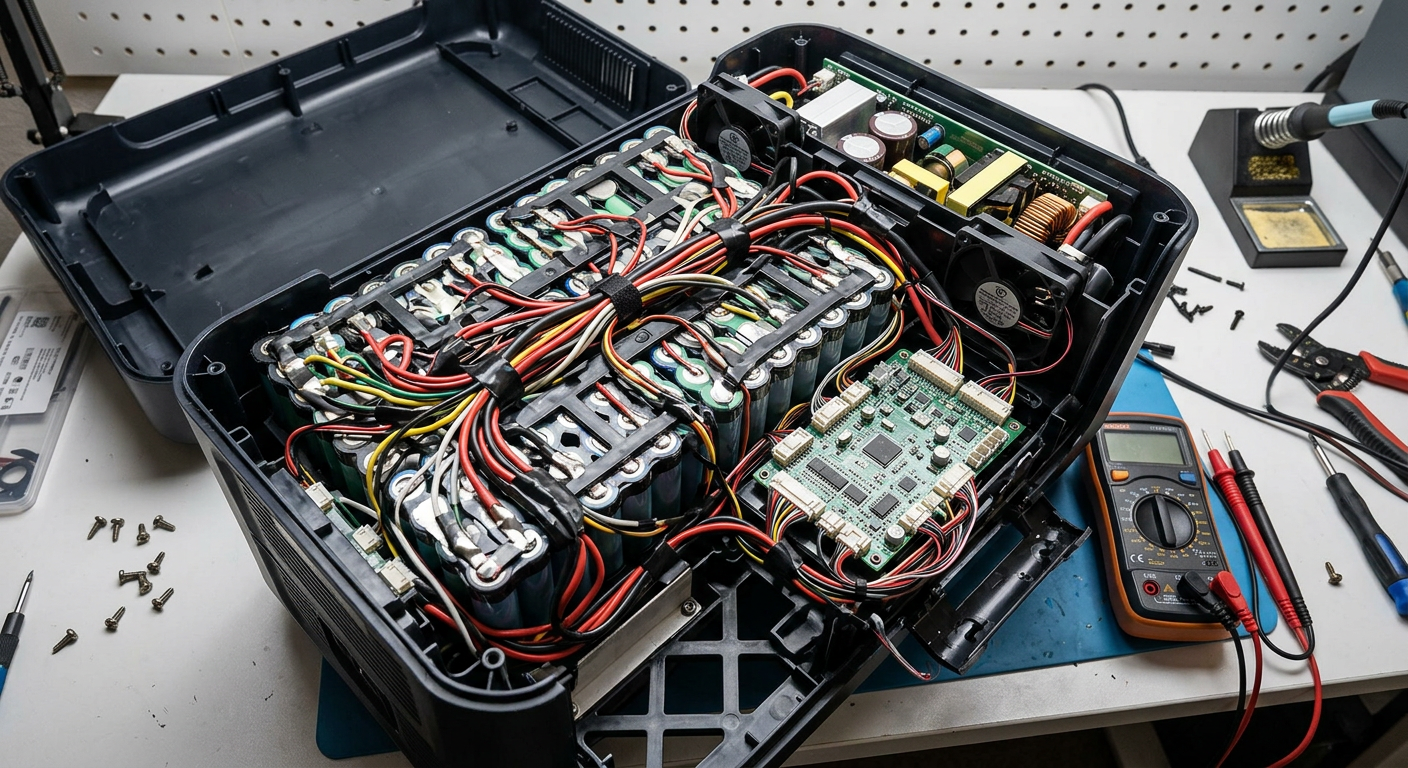
Ideal for: Home backup systems, RV house batteries, off-grid cabins, solar storage, medical device backup (CPAP), frequent campers.
Related: best portable power station for home backup and home backup power guide.
Choose NCM if:
- Weight matters most: Backpacking, kayak camping, air travel considerations.
- Cold weather use: Winter camping, alpine environments.
- Occasional use: Weekend trips a few times per year.
- Budget constrained upfront: Lower initial investment, even if replacement comes sooner.
- You upgrade gear frequently: Technology changes; you might want a new unit in 3–4 years anyway.
Ideal for: Backpacking power, emergency car kits, flight-friendly units, occasional campers, tech enthusiasts who upgrade often.
Related: best portable power station for camping.
Here’s what marketing doesn’t tell you: most users never fully discharge their power station.
If you typically use 30–50% of capacity before recharging, both chemistries last dramatically longer than their rated cycle life. A LiFePO4 battery with 4,000 rated cycles might deliver 8,000+ partial cycles. NCM’s 1,000 rated cycles becomes 2,000+ partial cycles.
This is why occasional users often find NCM perfectly adequate—their real-world usage is so light that the chemistry’s theoretical limitation never becomes practical.
Conversely, if you’re running your power station hard (daily deep discharges), LiFePO4’s durability becomes essential, not just preferable.
Temperature affects battery chemistry more than most users realize. Understanding how lifepo4 vs ncm battery power station units respond to heat and cold helps you maximize lifespan and avoid dangerous situations.
Operating temperature ranges
LiFePO4 temperature performance:
- Optimal range: 50°F to 95°F (10°C to 35°C)
- Charging limit: Cannot charge below 32°F (0°C)—lithium plating occurs, causing permanent damage
- Discharging: Can discharge to -4°F (-20°C) but capacity drops 20–30%
- Heat tolerance: Safe to 140°F (60°C) continuous, thermal runaway >270°C
NCM temperature performance:
- Optimal range: 32°F to 113°F (0°C to 45°C)
- Cold performance: Maintains 70–80% capacity at -4°F (-20°C)
- Heat vulnerability: Degrades rapidly above 113°F; thermal runaway ~150°C
- Charging: Can charge down to 14°F (-10°C) with reduced current
Real-world implications
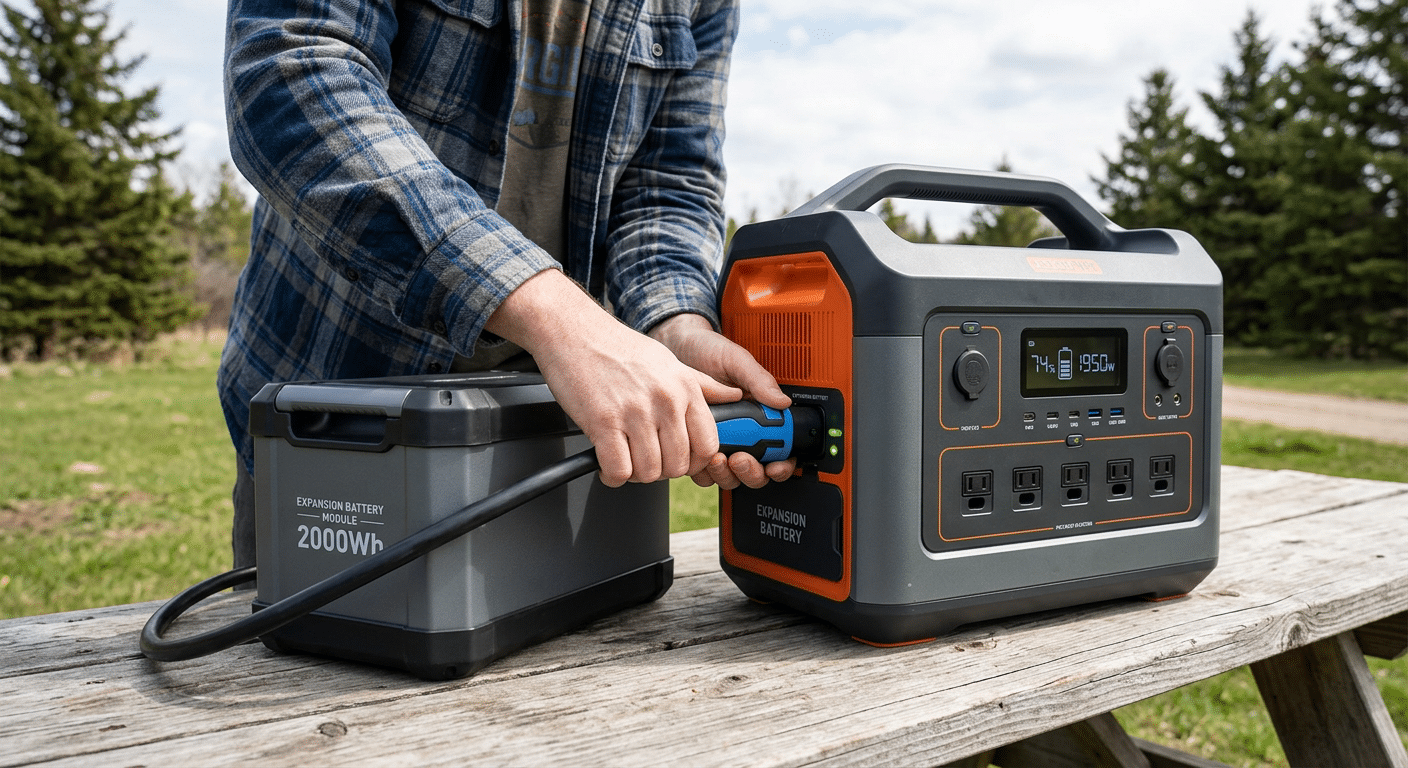
Winter camping scenario:
You’re camping in 20°F (-6°C) weather. Your LiFePO4 power station won’t charge from solar panels until temperatures rise above freezing. An NCM unit charges (albeit slower) but loses capacity in the cold.
Solution for LiFePO4: Store the unit in an insulated box or heated tent during charging.
Summer car storage:
Your power station sits in a car trunk reaching 120°F (49°C). LiFePO4 tolerates this without degradation. NCM loses 10–20% of remaining cycle life per month at these temperatures.
Solution for NCM: Remove from car when parked in sun.
Related: cold weather portable power station runtime and leave portable power station in hot car.
Advanced charging optimization for maximum lifespan
How you charge your power station dramatically impacts longevity. These techniques add 20–40% to battery lifespan regardless of chemistry.
The 20–80 rule explained
For LiFePO4:
- Daily use: 20–80% range gives you longer lifespan with minimal stress
- Emergency reserve: Keep 100% charged for backup scenarios, but discharge to 50% for long-term storage
- Best practice: Recharge when hitting 20%, stop at 80% for routine cycling
For NCM:
- Critical: 20–80% range is essential—full 0–100% cycles destroy NCM rapidly
- Practical application: Treat a 1,000Wh unit as an 800Wh unit (20–80%)
- Long-term storage: Store at 50% charge, check monthly
Related: can I leave my solar generator plugged in all the time and store portable power station for emergencies.
Charge rate optimization
| Charge speed | LiFePO4 impact | NCM impact |
|---|---|---|
| 0.1C (10-hour full charge) | Minimal stress, +20% lifespan | -5% capacity after 500 cycles |
| 0.3C (3-hour charge) | No measurable impact | -15% capacity after 500 cycles |
| 0.5C (2-hour charge) | Slight warming, -5% after 2000 cycles | -30% capacity after 500 cycles |
| 1C+ (1-hour or less) | Manageable with cooling | Significant degradation |
Translation: Fast charging convenience costs longevity, especially for NCM. LiFePO4’s stability makes it more forgiving of aggressive charging profiles.
Top power station recommendations by chemistry
LiFePO4 power stations
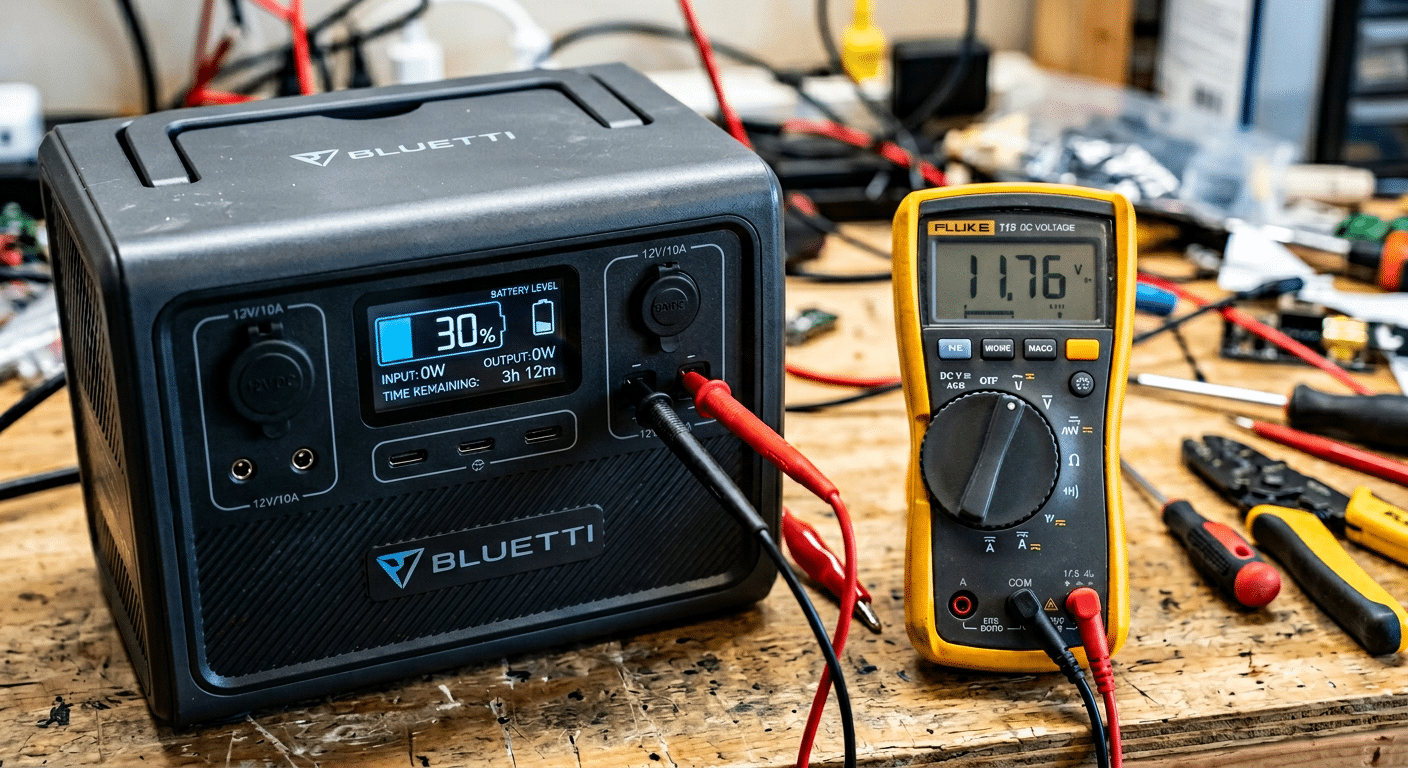
BLUETTI AC200MAX
- 2,048Wh capacity, expandable to 8,192Wh
- 3,500+ cycle life
- 16 output ports including 2200W AC
- Ideal for home backup and off-grid living
EcoFlow DELTA 2 Max
- 2,048Wh capacity
- 3,000 cycles to 80%
- Fast charging: 0–100% in 81 minutes
- Good balance of capacity and portability
Jackery Explorer 2000 Plus
- 2,042Wh expandable to 12 kWh
- 4,000 cycle life
- 3000W output
- Modular system for growing needs
Related: best portable power station reviews.
NCM power stations
EcoFlow DELTA Pro
- 3,600Wh NCM battery
- 6,500 cycles to 50% capacity
- 3600W output, expandable to 25 kWh
- Best-in-class app and ecosystem
Jackery Explorer 1000 Pro
- 1,002Wh NCM
- 1,000 cycles to 80%
- 23 lbs—highly portable for capacity
- Dual 100W PD ports
Anker PowerHouse 555
- 512Wh NCM
- 1,000 cycle life
- 12 lbs—ultra-portable
- 500W output with 6 ports
Related buying guides: portable power station buying guide and how to read portable power station reviews.
FAQ: Real user questions answered
Q: Can I mix LiFePO4 and NCM batteries in parallel for more capacity?
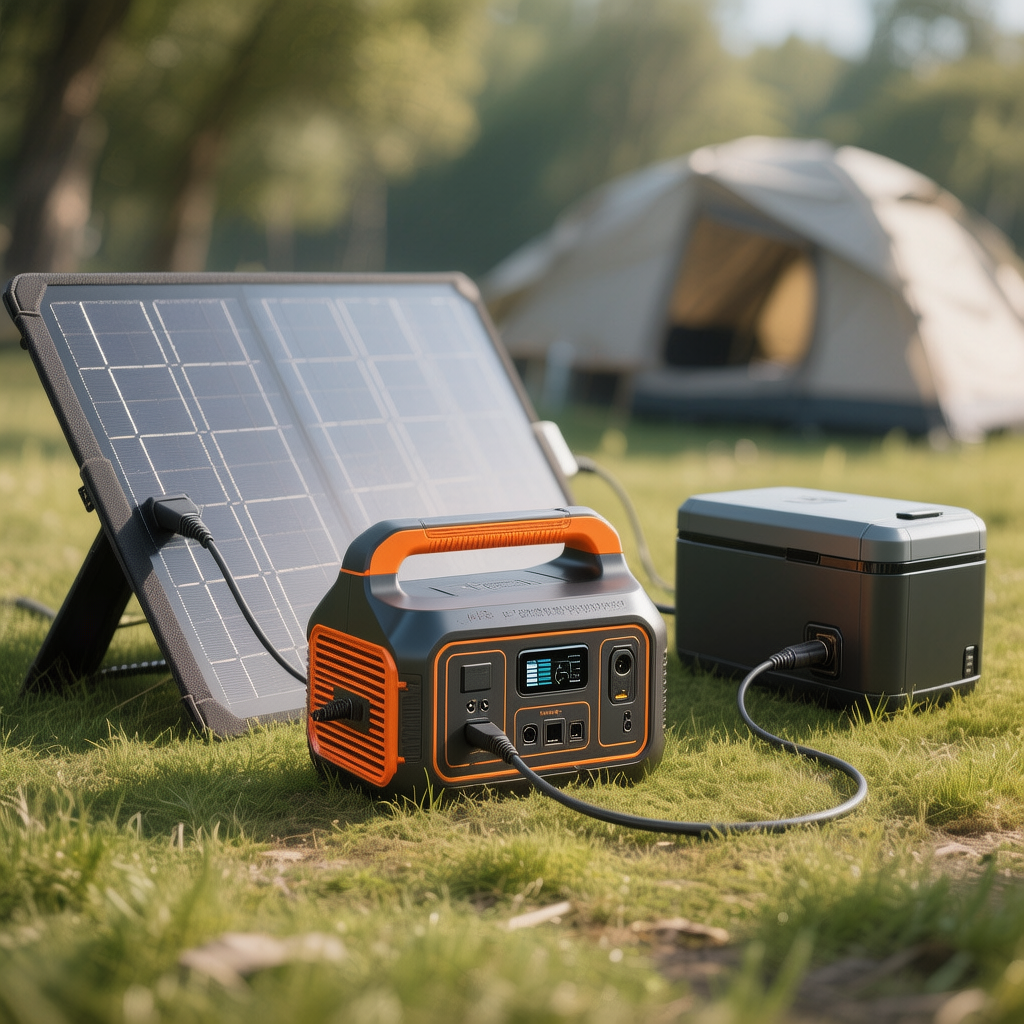
A: Absolutely not. Different voltage curves, charge requirements, and BMS communication protocols make this dangerous. Use identical chemistry and ideally identical model/brand for expansion.
Q: Which chemistry is better for medical devices like CPAP machines?
A: LiFePO4 for safety and reliability. CPAP users typically need overnight power where failure isn’t acceptable. LiFePO4’s longer lifespan also means fewer battery replacements over years of nightly use.
Related: best portable power station for CPAP camping.
Q: How do I know when my battery is actually at end-of-life?
A: When capacity drops below 70–80% of rated Wh, affecting your use case. Not when it hits zero. Most users retire batteries when runtime becomes impractical, not when they stop working entirely.
Related: calibrate portable power station battery.
Q: Can damaged batteries be repaired?
A: Individual cells can sometimes be replaced by professionals, but it’s rarely cost-effective. Modern power stations use sealed packs designed for replacement, not repair. Warranty is your best protection.
Q: Do power stations “self-discharge” when stored?
A: Yes, slowly. LiFePO4: 2–3% per month. NCM: 5–10% per month. Check every 3 months if in storage; recharge to 50% if below 30%.
Q: Is it safe to sleep in the same room as a power station?
A: LiFePO4: Yes, very safe. No off-gassing, stable chemistry. NCM: Generally safe but slightly higher risk. Both should have ventilation and not be covered by bedding.
Related: portable power station fire safety apartment and charge portable power station inside apartment safe.
Q: Can I upgrade my NCM power station to LiFePO4 later?
A: No, battery chemistry is fundamental to the unit’s design. You’d need to replace the entire power station. Buy LiFePO4 from the start if you anticipate long-term ownership.
The bottom line
LiFePO4 has won the power station war for good reason. For most users, the 3–6× longer lifespan outweighs the weight penalty. When you calculate cost per usable watt-hour over the battery’s life, LiFePO4 is often cheaper despite higher upfront prices.
But NCM isn’t dead—it fills a niche for weight-conscious users and occasional adventurers who won’t cycle their battery enough to wear out either chemistry.
The real mistake? Letting marketing dictate your choice. Match the battery chemistry to your actual usage patterns, not some theoretical “best.”
Action items
- Audit your usage: Track how often you’ll actually discharge your power station. Daily users need LiFePO4; monthly users can consider NCM.
- Calculate total cost of ownership: (Price ÷ Rated Cycles ÷ Capacity in kWh) × Years of Expected Use. This reveals the true winner for your situation.
- Check the warranty: A 5-year warranty on LiFePO4 versus 2-year on NCM often tells you what the manufacturer expects for lifespan.
- Consider expandability: If you might need more capacity later, choose a brand with battery expansion options—swapping chemistries mid-ownership is expensive.
- Read real user reviews: Look for 2+ year old reviews. NCM units with high cycle counts will show capacity degradation; LiFePO4 units should still report 95%+ capacity.
Outbound links (external resources)
- Battery fundamentals and chemistry behavior: Battery University
- Lithium-ion battery safety standards: U.S. DOE Battery Safety
- Environmental impact of battery materials: NIST Materials Research