Buying Guides & Comparisons
Portable Power Station Benchmarks: What Measurements Mean
Interpret power station benchmarks by checking delivered energy, loads and test conditions. Compare charging and noise results only when methods match.

Guides to choosing, sizing and using portable power stations for home backup and camping.
Interpret power station benchmarks by checking delivered energy, loads and test conditions. Compare charging and noise results only when methods match.
Choose extension cords for a power station by their voltage, current, length and environment ratings. Check appliance restrictions and connection condition.
Assess power station noise and heat in an apartment by operating mode and placement. Keep cooling clear and recognize signs that need manufacturer support.
Compare RIVER 2 and EB3A capacity, AC output, ports, charging and backup limits, with clear runtime calculations and model-specific buying checks.
Compare BLUETTI, EcoFlow and Jackery by exact models and regional versions. Check capacity, supported outputs and charging against the equipment you use.
LiFePO4 battery cycle life depends on depth of discharge, charge rate, temperature and voltage window. Calendar aging usually matters more than the cycle count.
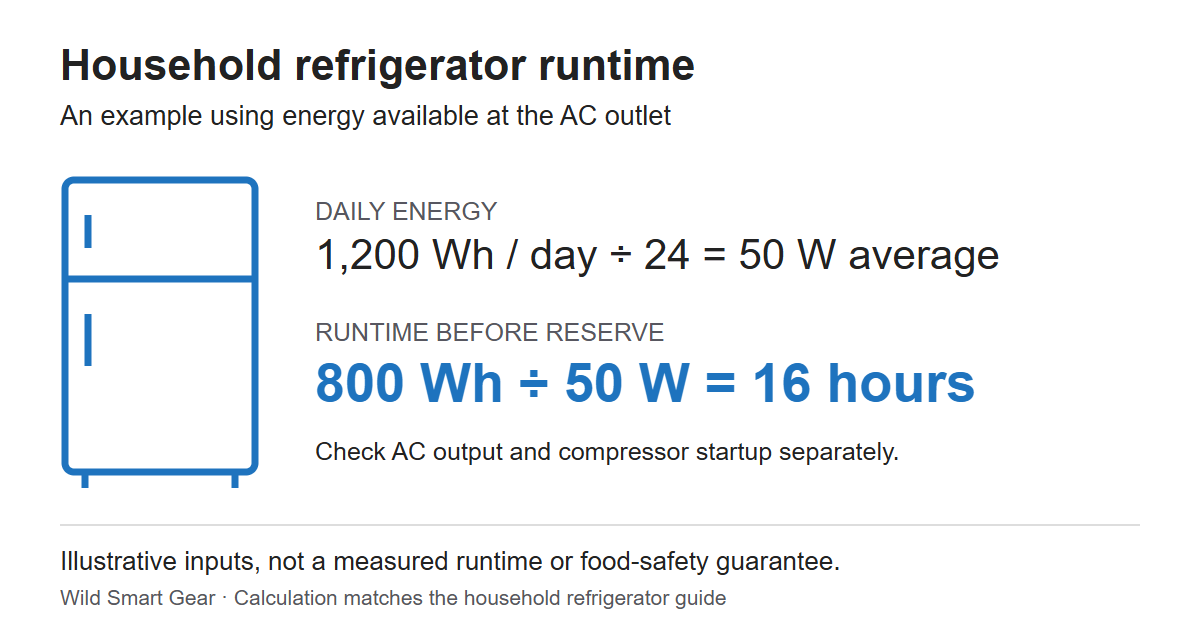
Check refrigerator startup compatibility, calculate battery runtime from daily energy use and plan recharge and food safety during an outage.
Compare AC, DC and USB power paths by compatibility and conversion losses. Use consistent energy measurements and avoid counting adapter losses twice.
Learn how watts and watt-hours describe different power station limits. Calculate energy from load and duration, then check output power and startup demand.