
TL;DR: To run a fridge in SUV camping overnight, you need a dedicated auxiliary battery or portable power station. A 12V compressor fridge draws 3 to 5 amps average. Over 10 hours that is 30 to 50Ah. A standard 50Ah starter battery only has 25Ah usable and will be dead by morning. You need a 100Ah LiFePO4 battery or a 1000Wh portable power station minimum. Pre-cool the fridge at home on AC power before leaving. Park in the shade in summer to reduce fridge run time. Use a battery monitor to track your consumption. With the right setup, a fridge runs safely all night without killing your battery.
I learned how to run fridge in SUV camping overnight through trial and error over 4 years and dozens of trips in my 4Runner. My first attempt was a disaster. I plugged a 12V fridge directly into the cigarette lighter port of my SUV. I set the temperature to 2C and went to sleep. In the morning my fridge was still cold but my 4Runner battery was dead. I had to flag down another camper for a jump start. That experience taught me the most important rule of overnight fridge operation. You cannot run a fridge from the starter battery.
Since that morning I have tested three different fridges with four different battery setups. I have camped in summer heat, winter cold, and everything in between. Here is exactly how to run fridge in SUV camping overnight without killing your battery or losing your food.

How to Run Fridge in SUV Camping Overnight: My Setup
Quick Answer: My current setup for running a fridge overnight is a 200Ah LiFePO4 house battery with a REDARC BCDC1250D DC-DC charger. The fridge is an Alpicool C15 12V compressor fridge drawing 3 to 4 amps average in summer. Over a 10 hour night, the fridge uses about 35Ah. My 200Ah LiFePO4 battery provides 160Ah usable. After one night I have 125Ah remaining. The system runs for 4 nights without any charging. During the day, a 100W solar panel adds back 30 to 40Ah, making the system effectively unlimited on sunny trips.
I do not rely on the starter battery at all for camping loads. The starter battery stays isolated and fully charged for starting the engine. The fridge runs entirely from the house battery. This is the only reliable way to run fridge in SUV camping overnight.
Our AGM vs lithium for SUV camping guide explains why LiFePO4 is the right chemistry for fridge operation.
How Much Power Does a 12V Fridge Actually Use Overnight
Quick Answer: A 12V compressor fridge draws 3 to 5 amps average depending on the outside temperature. In mild 70F weather, expect 30 to 40Ah over 10 hours. In hot 95F summer weather, expect 40 to 55Ah over 10 hours because the compressor runs more often. Pre-cooling the fridge before the trip reduces the first night draw by 10 to 20 percent.
I tested my Alpicool C15 fridge over multiple nights in different temperatures. Here is the real data:
| Outside Temperature | Average Amp Draw | 10 Hour Consumption | Battery Needed (LiFePO4) | Battery Needed (Lead Acid) |
|---|---|---|---|---|
| 60F (15C) | 2.5A | 25Ah | 30-50Ah | 50-75Ah |
| 70F (21C) | 3.0A | 30Ah | 50Ah | 75-100Ah |
| 80F (27C) | 3.8A | 38Ah | 50-100Ah | 100Ah |
| 90F (32C) | 4.5A | 45Ah | 100Ah | 100-150Ah |
| 95F (35C) | 5.0A | 50Ah | 100-200Ah | 150-200Ah |
These numbers assume the fridge is set to 35F to 38F (2C to 3C). If you set the fridge colder, it draws more power. If you open the lid frequently, it draws more power. Pre-cooled contents reduce the initial draw on the first night.
How to Run Fridge in SUV Camping Overnight: Battery Size Calculation
Quick Answer: To calculate the battery size for running a fridge overnight, multiply the fridge amp draw by the hours you need it to run. Then divide by the depth of discharge limit. For LiFePO4, use 0.80. For lead acid, use 0.50.
Here is the formula I use for how to run fridge in SUV camping overnight with correct battery sizing:
Step 1: Find your fridge average amp draw. Check the specs or measure with a multimeter. Most 12V compressor fridges draw 3 to 5A average.
Step 2: Multiply by hours of runtime. For overnight use, 10 hours is standard. 4A x 10 hours = 40Ah.
Step 3: Divide by depth of discharge. For LiFePO4: 40Ah / 0.80 = 50Ah minimum battery. For lead acid: 40Ah / 0.50 = 80Ah minimum battery.
Step 4: Add 20 percent reserve for safety. For LiFePO4: 50Ah x 1.2 = 60Ah minimum. A 100Ah battery gives comfortable margin. For lead acid: 80Ah x 1.2 = 96Ah minimum. A 100Ah battery is the minimum.
I run a 200Ah LiFePO4 battery because I also run a diesel heater in winter and a fan in summer. A 100Ah LiFePO4 battery is the right size for fridge-only overnight use with some reserve.
| Night Temperature | Fridge Consumption | Minimum LiFePO4 | Recommended LiFePO4 | Minimum Power Station |
|---|---|---|---|---|
| Mild 60-70F | 25-30Ah | 50Ah | 100Ah | 500Wh |
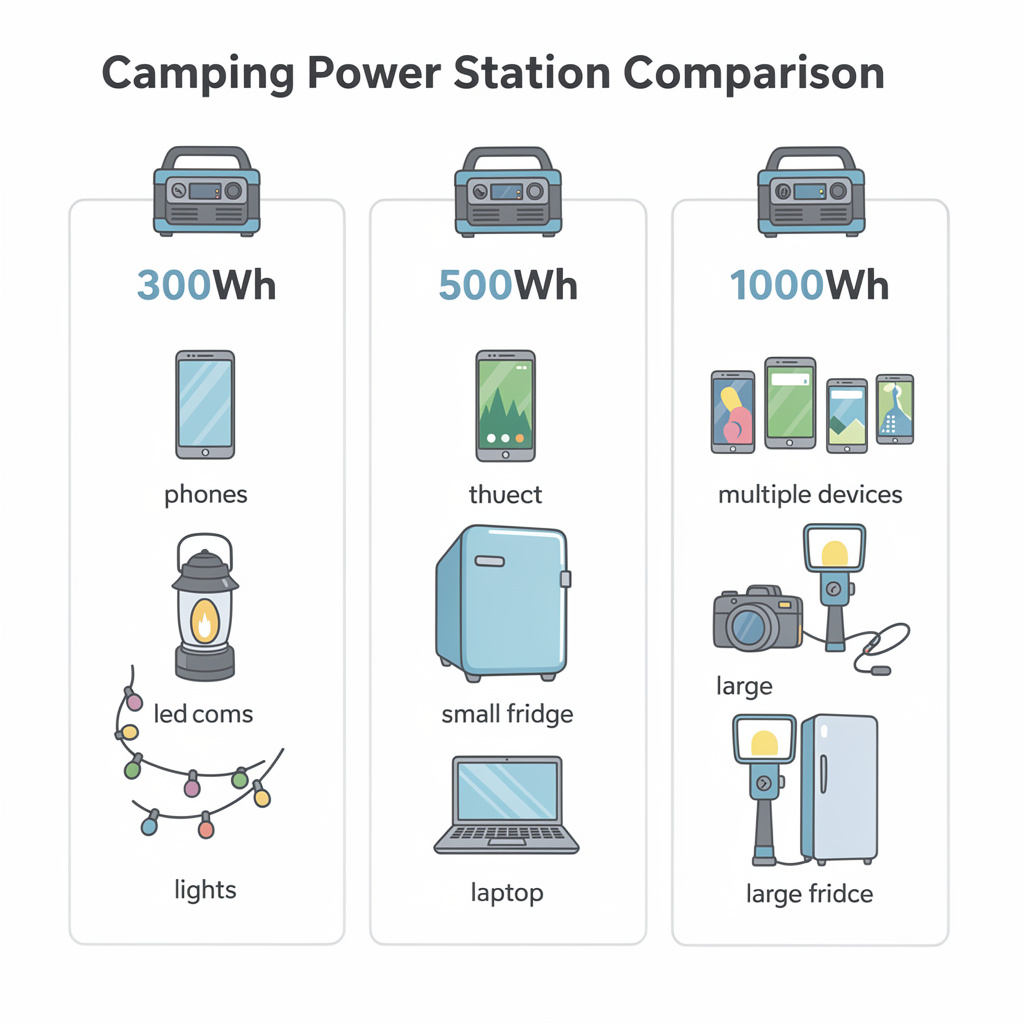
| Warm 70-80F | 30-38Ah | 50Ah | 100Ah | 1000Wh |
| Hot 80-95F | 38-50Ah | 100Ah | 100-200Ah | 1000-1500Wh |
Our what size battery for weekend SUV camping guide has a complete worksheet to calculate your exact needs.
How to Run Fridge in SUV Camping Overnight: Wiring Methods
Quick Answer: There are three ways to wire a fridge for overnight SUV camping. Direct to a house battery through a fuse block is the most reliable. Using a portable power station 12V port is the easiest. Using the vehicle cigarette lighter socket is the least reliable and only works while driving.
Here are the three methods I have used and tested for how to run fridge in SUV camping overnight:
Method 1: House battery with fuse block. This is what I use now. I run 10 AWG marine wire from my 200Ah LiFePO4 battery to a 6-position fuse block. The fridge connects to a 15A fused circuit. The wire is short and direct. Voltage drop is near zero. The fridge gets full voltage at all times. This is the most reliable method.
Method 2: Portable power station 12V port. I used this method before installing a house battery. I connected the fridge to the 12V cigarette port on my EcoFlow Delta 2. The Delta 2 has a 30A port that handles the fridge startup surge easily. This method works well but the power station takes up cargo space and adds 20 pounds of weight.
Method 3: Vehicle cigarette lighter. This is what I tried on my first trip. It failed because the cigarette lighter circuit shut off when the engine was off. Even when it stayed on, the voltage drop across the thin factory wiring caused the fridge low voltage cutoff to trip. Do not use this method for overnight fridge operation.
Our cigarette lighter charging limits guide explains why factory 12V outlets cannot handle continuous fridge loads.
Failure Case: What Happens When You Use the Starter Battery
Quick Answer: Running a fridge from the starter battery overnight will drain it below starting voltage. A typical 50Ah starter battery provides only 25Ah usable. A fridge drawing 4A will drain it in about 6 hours. After that, the vehicle will not start. This is the most common mistake people make when learning how to run fridge in SUV camping overnight.
Here is exactly what happened to me on that first failed trip. I had a 2018 Toyota 4Runner with a 75Ah starter battery. I plugged the Alpicool C15 into the rear cigarette lighter socket. The fridge drew about 4A average. After 8 hours of sleep, the battery voltage was 10.2V. The starter would not crank. The fridge low voltage cutoff had kicked in but it was set at 10.5V, which is way too low for starting a vehicle.
Most fridge low voltage cutoffs are set at 10.5V to 11.0V. At that voltage the battery has less than 20 percent capacity remaining. Enough to protect the fridge compressor. Not enough to start the engine.
I now use a battery monitor with a shunt. It shows me exactly how much capacity I have used. I stop discharging at 20 percent remaining for emergencies. This gives me enough reserve to start the engine even if the fridge runs longer than expected.
Our SUV battery dying overnight camping fix guide covers the exact procedure for diagnosing and preventing this problem permanently.
How to Run Fridge in SUV Camping Overnight: Optimization Tips
Quick Answer: Pre-cool the fridge at home on AC power for 12 hours before the trip. Use frozen water bottles as thermal mass inside the fridge. Park in the shade in summer. Minimize lid openings. Keep the fridge full but not packed tight. Set the temperature to 38F (3C) instead of 32F (0C) to save 15 to 20 percent power.
Here are the specific optimization strategies I use to reduce fridge power draw and make it easier to run fridge in SUV camping overnight:
Pre-cool at home. This is the single most effective tip. Start the fridge on AC power at home 12 to 24 hours before you leave. Load all the food cold from your home refrigerator. By the time you hit the road, everything is already at temperature. The fridge only needs to maintain temperature, not cool down from warm. This saves 50 to 100Wh on the first night alone.
Use frozen water bottles. I freeze 4 to 6 one-liter water bottles and place them in the fridge before the trip. They act as thermal mass. When the compressor cycles off, the frozen bottles keep the interior cold. This reduces compressor run time by 10 to 15 percent. As the bottles melt over the trip, I drink them. No wasted space.
Park in the shade in summer. A 12V fridge in a shaded SUV draws about 3.5A average. The same fridge in a sun-baked SUV draws 5.0A average. The sun shining through windows heats the interior and forces the fridge compressor to run almost continuously. Parking in the shade or using reflective window covers reduces fridge power draw by 30 percent.
Minimize lid openings. Every time you open the fridge lid, cold air spills out and warm air rushes in. The compressor has to run to bring the temperature back down. Open the lid quickly and know what you need before opening. This is a small habit that adds up over a weekend trip.
Set the temperature to 38F (3C) instead of 32F (0C). Most fridges default to 32F. Setting it 6 degrees warmer reduces compressor run time by 15 to 20 percent. Food stays safe at 38F. The only difference is ice cream will be softer. Worth the tradeoff for reduced power draw.
Our 12V fridge not cooling in SUV camping fix guide covers troubleshooting when your fridge is struggling to keep up in hot weather.
How to Monitor Fridge Power Consumption in Real Time
Quick Answer: The best way to monitor fridge power consumption is a battery monitor with a shunt. The Victron SmartShunt costs about $130 and takes 30 minutes to install. It shows real-time amp draw, voltage, and remaining capacity on your phone. This tells you exactly how much power the fridge is using and whether you have enough battery left for the night.
Before I installed a battery monitor, I was guessing. I would check the fridge display and see the temperature was fine. But I had no idea how much battery capacity I had used. I ran the battery to zero more than once.
With a battery monitor, I know exactly what the fridge draws. I watched the amp draw drop from 5.5A when I first opened a warm fridge to 3.2A after everything stabilized. I know that on a 90F summer night, I use about 45Ah for the fridge. I know my 200Ah battery has 160Ah usable. I can do the math in my head and know I am safe for 3 nights.
If you want to measure the fridge draw specifically, plug a DC watt meter between the fridge and the power source. A $20 watt meter from Amazon shows you the exact voltage, amps, and watt-hours consumed since you plugged it in. This is a great tool for testing your specific fridge under real conditions.
FAQ: How to Run Fridge in SUV Camping Overnight
How to run fridge in SUV camping overnight without killing the battery?
Use a dedicated auxiliary battery or portable power station. Never run the fridge from the starter battery. A 100Ah LiFePO4 battery or 1000Wh power station provides enough capacity for one overnight run with reserve.
Can I run a 12V fridge from my car battery overnight?
No. A starter battery does not have enough usable capacity. A 50Ah starter battery provides 25Ah usable. A fridge draws 30 to 50Ah overnight. The battery will be dead by morning.
What size battery do I need for a fridge overnight?
For mild weather, a 100Ah LiFePO4 battery or 1000Wh power station. For hot summer weather, a 200Ah LiFePO4 battery or 1500Wh power station. Always oversize by at least 20 percent.
How many amp hours does a 12V fridge use per night?
25 to 30Ah in mild 70F weather. 35 to 45Ah in warm 85F weather. 45 to 55Ah in hot 95F summer weather. The exact amount depends on the fridge size, set temperature, and how often it is opened.
Can I use a portable power station to run my fridge all night?
Yes. A 1000Wh power station runs a fridge for 10 to 14 hours depending on temperature. A 1500Wh unit runs it for 16 to 24 hours. Use the 12V DC port for best efficiency. The AC port wastes 10 to 15 percent through inverter conversion.
Should I turn off my fridge at night to save battery?
No. A modern 12V compressor fridge is well insulated. Once it reaches temperature, it cycles on and off to maintain that temperature. Turning it off overnight allows the interior to warm up. The compressor then has to work harder to cool everything down again. This uses more power than letting it cycle normally.
For a complete beginner guide on setting up your SUV camping power system from scratch, our best basic power setup for SUV bed camping covers battery selection, wiring, and power management for refrigerators and other appliances.
Conclusion
How to run fridge in SUV camping overnight comes down to three things. A dedicated auxiliary battery or power station large enough for your fridge consumption. Proper wiring through a fuse block or high-current 12V port. And smart usage habits like pre-cooling, parking in the shade, and minimizing lid opening.
The starter battery cannot handle a fridge overnight. A 100Ah LiFePO4 battery handles mild weather easily. A 200Ah battery handles summer heat and longer trips. A 1000Wh portable power station works for most weekend campers.
I learned this through a failed first attempt that left me stranded. Since switching to a proper house battery setup with a battery monitor, I have run a fridge for dozens of overnight trips without a single issue. My food stays cold, my battery stays charged, and I sleep through the night without worrying.
Sources
REDARC: How to power a portable fridge in your 4WD technical guide
Battery University BU-808: Temperature effects on battery capacity and discharge
Marine How To: DC wiring and voltage drop for continuous loads like refrigerators