Runtime & Usage
Portable Power Station Load Planning for Home Backup
Build a household backup load schedule, separate watt-hours from simultaneous watts, and check usable capacity, reserve and recharge gaps before choosing a battery.

Guides to choosing, sizing and using portable power stations for home backup and camping.
Build a household backup load schedule, separate watt-hours from simultaneous watts, and check usable capacity, reserve and recharge gaps before choosing a battery.
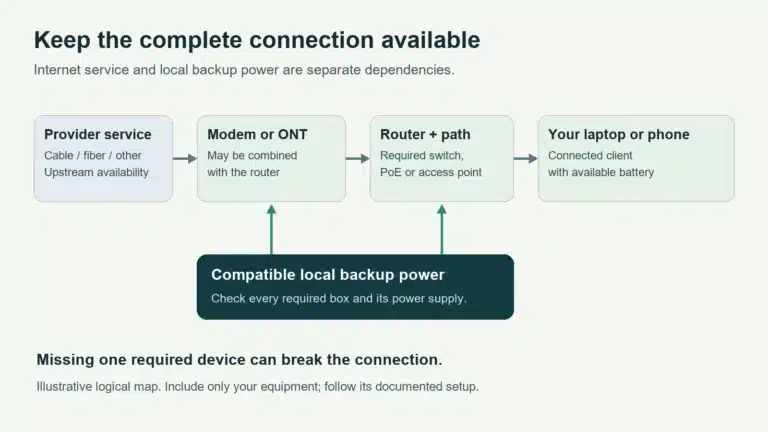
Keep the full network powered, separate local WiFi faults from provider outages, and rehearse the backup arrangement and mobile fallback before relying on them.
Assess whether battery power can replace a gas generator from load energy, output requirements and recharge access. Compare replenishment and safe placement.
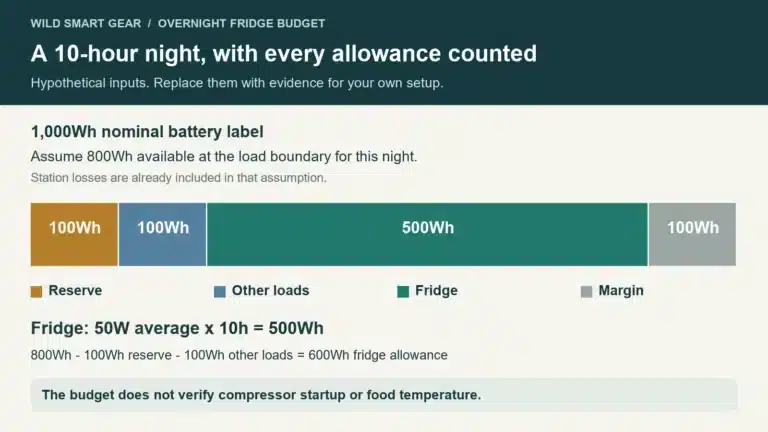
Estimate overnight household refrigerator backup from measured demand and usable AC energy. Check compressor startup, reserve and other loads separately.
Check whether a power station supports transfer equipment and building connections. Prepare a circuit load list for a qualified electrical compatibility assessment.
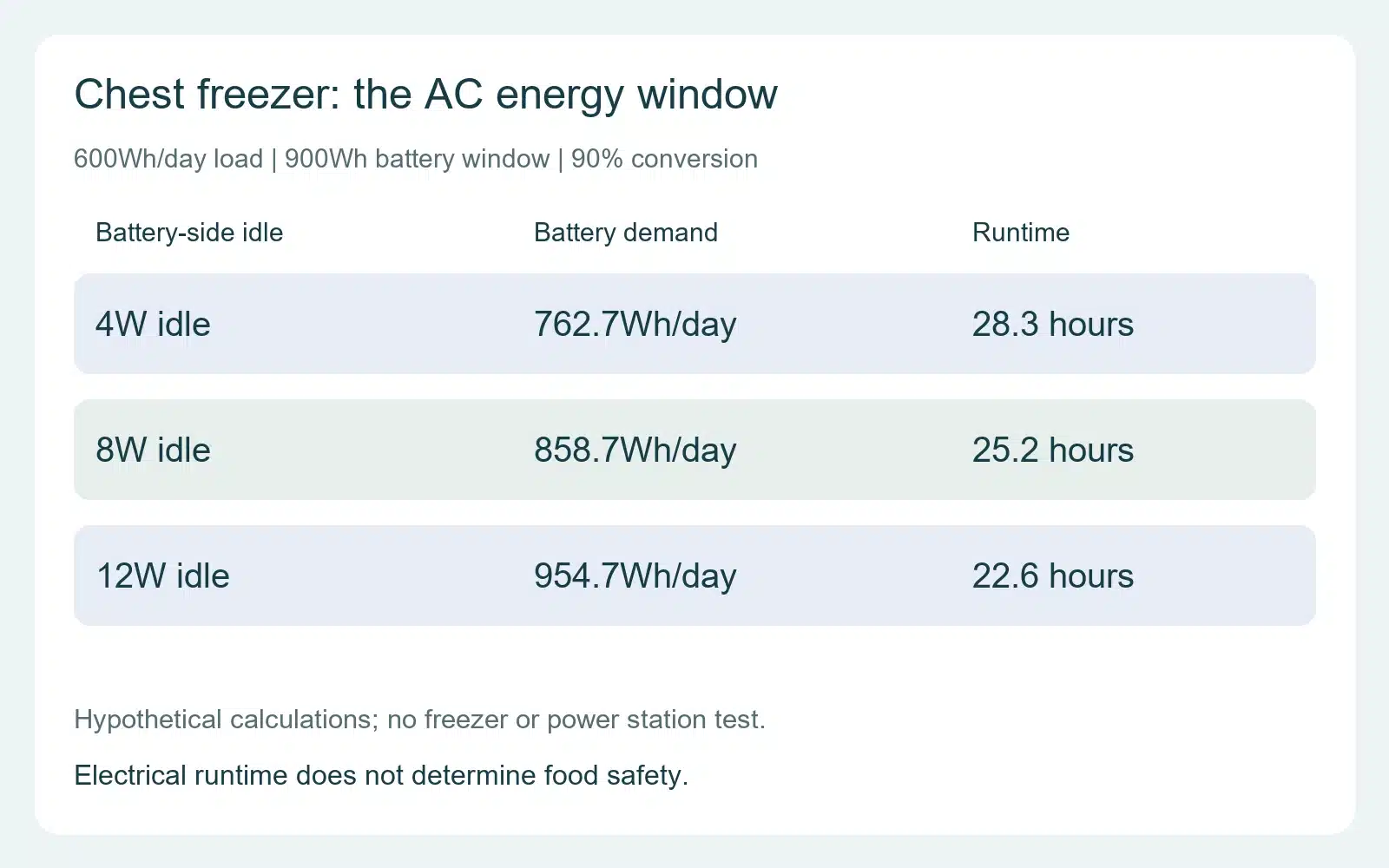
Check compressor startup, calculate freezer energy including AC standby losses, and follow food-specific outage guidance before relying on a portable battery.
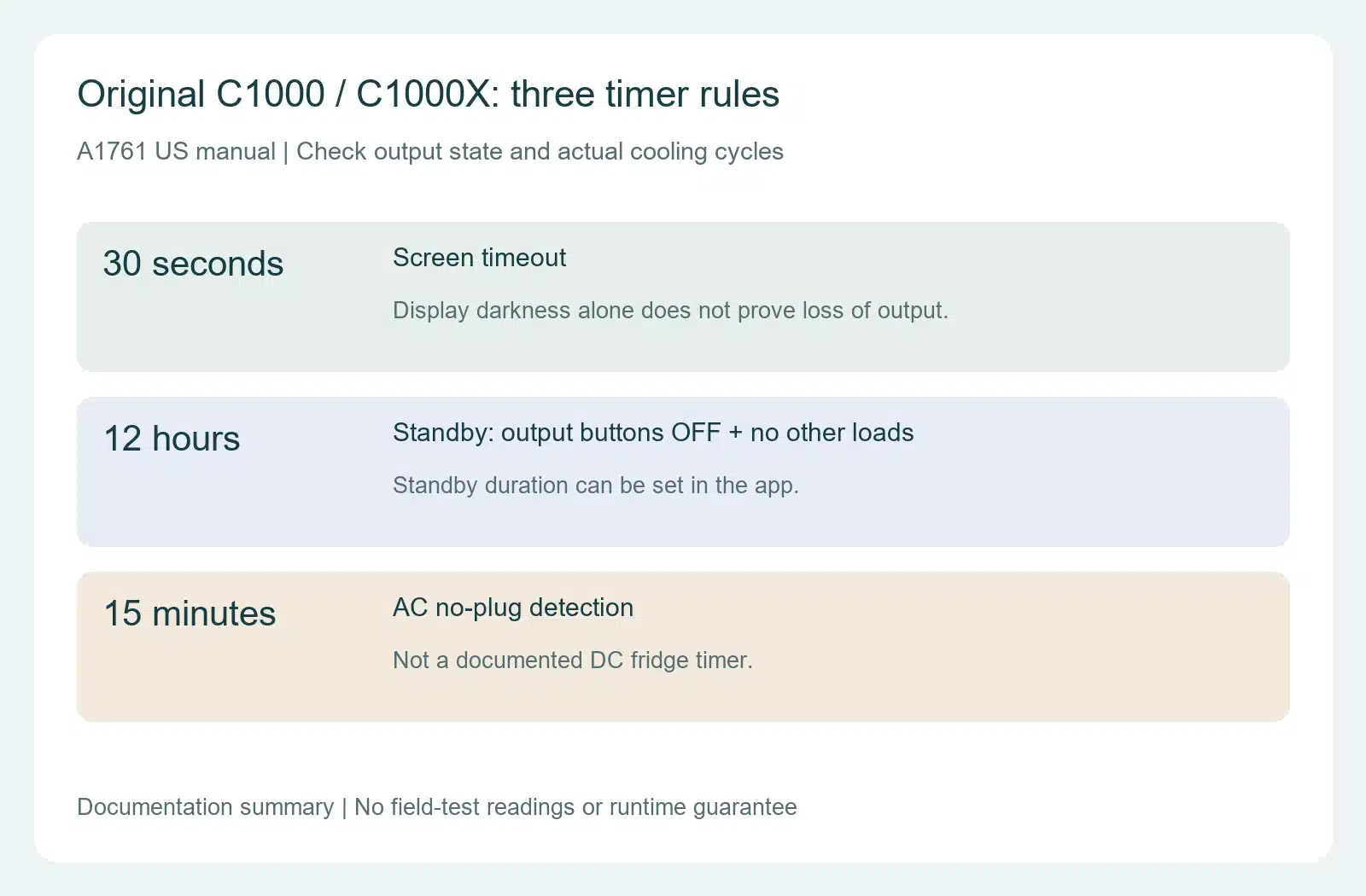
Check original US C1000/C1000X A1761 documentation, fridge compatibility, energy between charges, standby rules and vehicle fit.
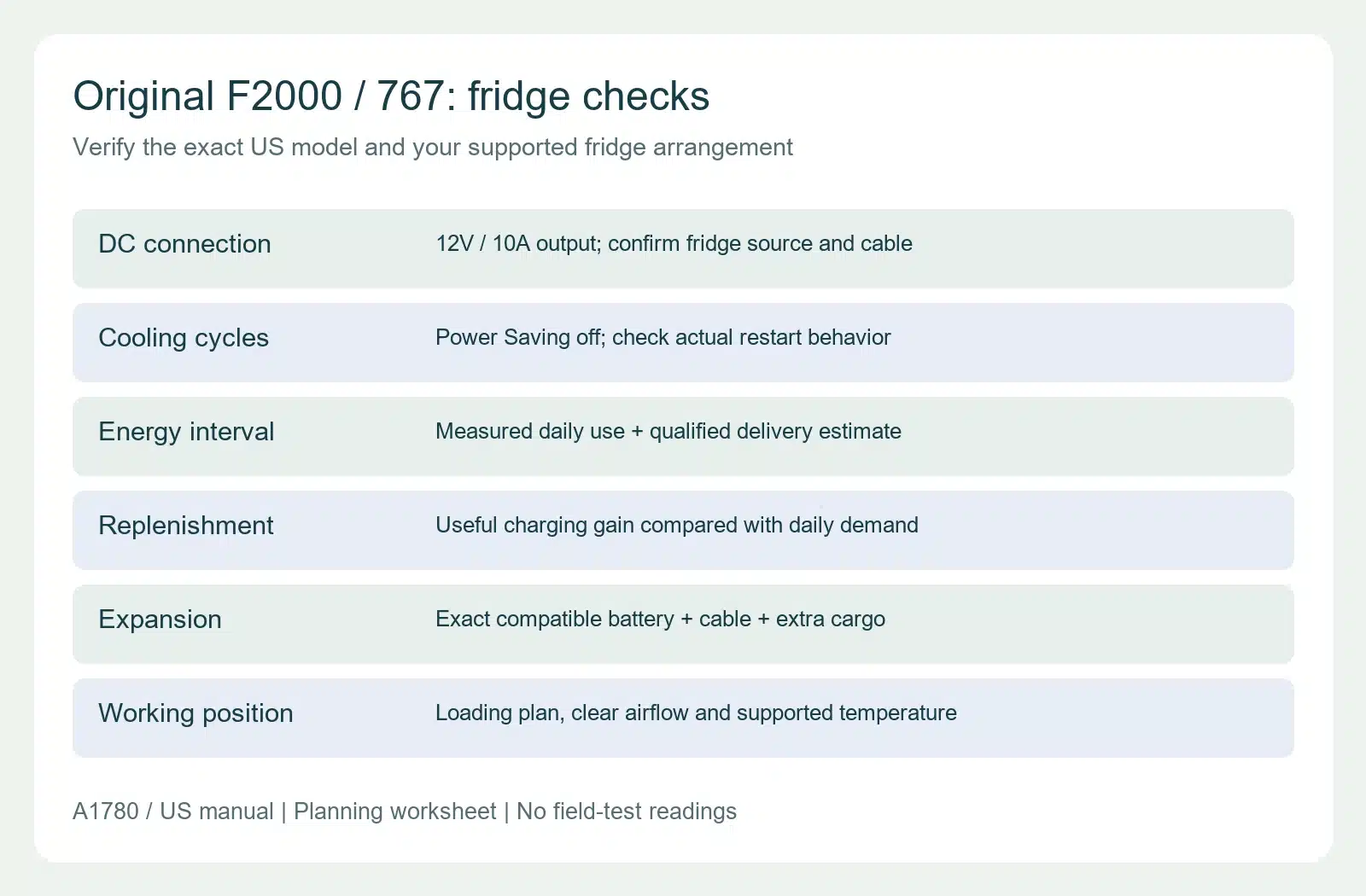
Check the original US F2000/PowerHouse767 against your fridge connection, required energy interval, output settings, recharging and loading space.
Compare two current US Anker Gen 2 power stations using the same fridge load, clear energy assumptions and documented outputs. Includes a missed-recharge plan.